Momentum and its direction
FREE PHYSICS REVISION · UNIT 3 · B2.4
Pearson BTEC Level 3 AAQ Applied Science · Issue 7 (May 2026)
Learning objectives
- Define momentum as the product of mass and velocity.
- Calculate momentum using p = mv with appropriate SI units.
- Determine signed momentum and changes in momentum when velocity reverses.
- Compare momentum in transport examples while keeping its direction distinct from speed alone.
Specification mapping: B2.4
Prerequisites: B1.3, B2.2
Physical principles
Linear momentum p is mass multiplied by velocity: p = mv. Its SI unit is kg m s⁻¹, equivalent to N s. Momentum is a vector and has the direction of velocity. A heavy slow object and a light fast object can have the same momentum, but this does not make all their other physical properties equivalent.
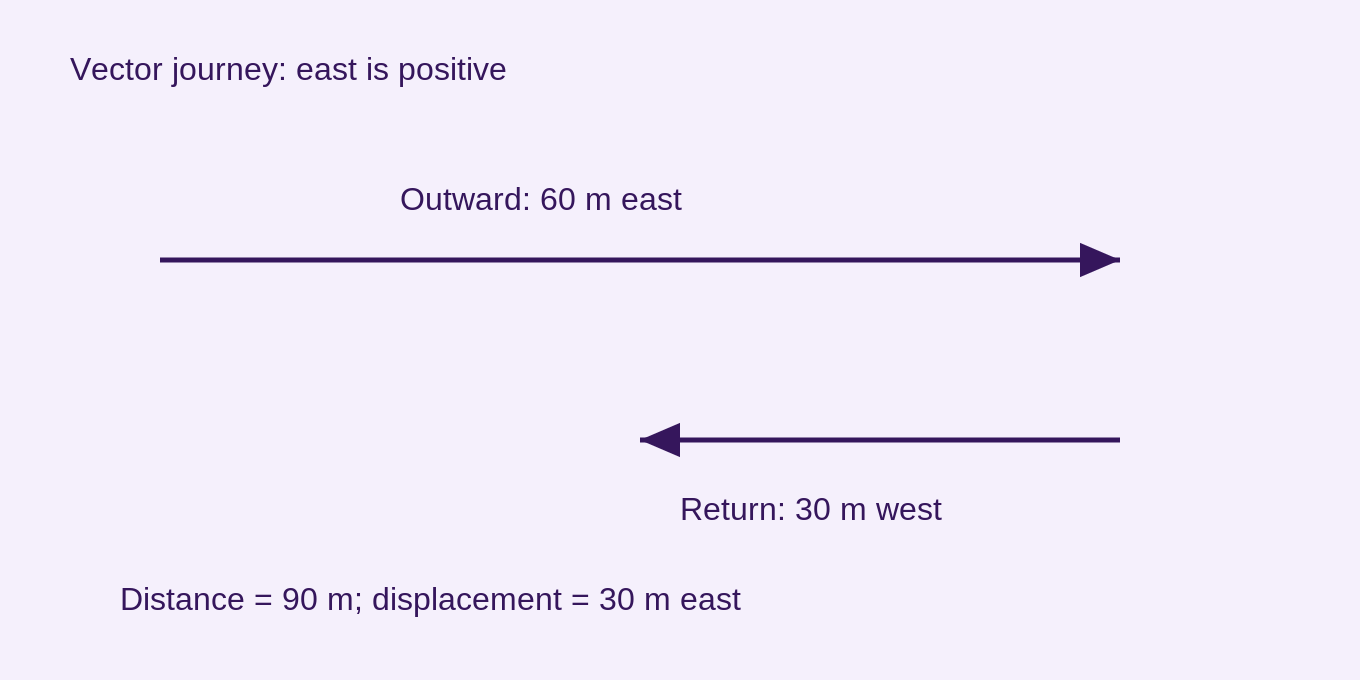
For one-dimensional problems, choose a positive direction and use signed velocities. A reversal can produce a momentum change larger in magnitude than the final momentum alone. The change is Δp = pfinal − pinitial, not the sum of unsigned speeds unless the directions make that appropriate.
For a system, total momentum is the vector sum of component momenta. Oppositely directed momenta can cancel even though both objects are moving. Momentum is conserved for an isolated system with negligible net external impulse; this supporting principle does not mean each object keeps its own momentum during a collision. The central required relation here is p = mv.
Scientific diagram and interpretation
Equations and relationships
p = mv
Worked examples and applications
Vehicle momentum
A 1.20 × 10³ kg car travels east at 15.0 m s⁻¹. p = 1200 × 15.0 = 18000 kg m s⁻¹ east = 1.80 × 10⁴ kg m s⁻¹ east.
Rebound
A 0.20 kg ball initially has v = +10 m s⁻¹ and rebounds at −6.0 m s⁻¹. Δp = 0.20(−6.0−10) = −3.2 kg m s⁻¹. Its momentum change points in the negative direction.
Common misconceptions
Momentum is not kinetic energy; equal momentum does not prove equal energy or equal collision damage.
Examination technique
Include direction and use final minus initial when calculating a change.
For an explanation, connect the physical cause to its effect. For a calculation, state the model, rearrange before substitution, retain intermediate digits, and finish with units. For a data question, refer to the actual readings and distinguish a trend from proof of a cause.
Check your understanding
Five questions. Choose an option, then Check Answer. Read the feedback and use Try Again to reset. Use Tab between controls, arrow keys within radio groups, and Enter or Space on buttons. These local practice answers are not saved.
Take Your Learning Further
Practise
Build Your Confidence
Reinforce your understanding with our topic-based workbook. Every workbook page links back to its matching online lesson, so you can revisit explanations whenever you need support.
Explore Workbook – PhysicsMaster
Get Exam Ready
Apply your knowledge with exam-style practice papers and detailed mark schemes. Identify what you’ve mastered and what to revise next.
Practice Papers – PhysicsEXAM RESOURCES
Physics exam resources
Apply your knowledge with written practice.
Browse exam resources